We have a chance to see the steel for sister blades those are tachi and wakizashi.
The steel block has completed the fold'n welding work. It is made from several quality of steels mixed complicatedly, in order to expect a Norishige like appearance.
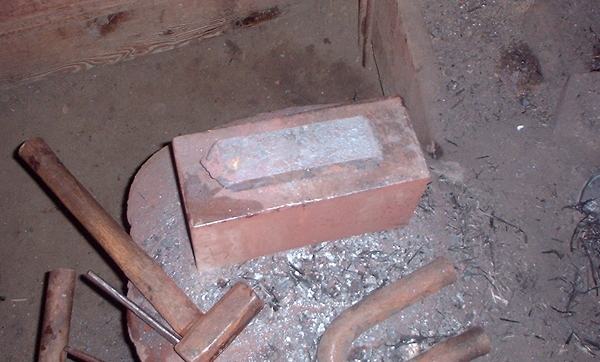
Actual example to make a Norishige like appearance on blades, tachi and
wakizashi
We have a chance to see the steel for sister blades those are tachi and
wakizashi.
The steel block has completed the fold'n welding work. It is made from
several quality of steels mixed complicatedly, in order to expect a Norishige
like appearance.
The steel block is divided into two pieces, one for tachi and the other
for wakizashi. Then they are constructed as the cutting edge of each of
the blades. The steel construction is Kobuse style.
After several stages, they are forged out. And then, go to polishing.
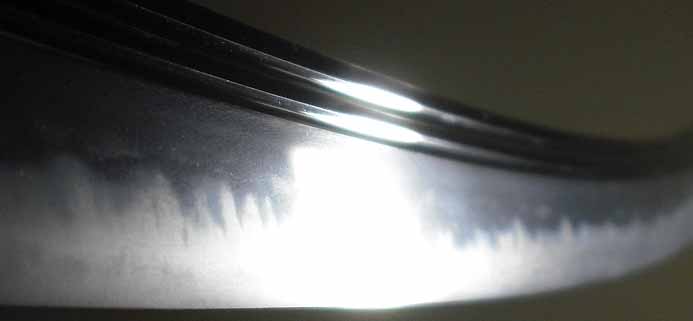
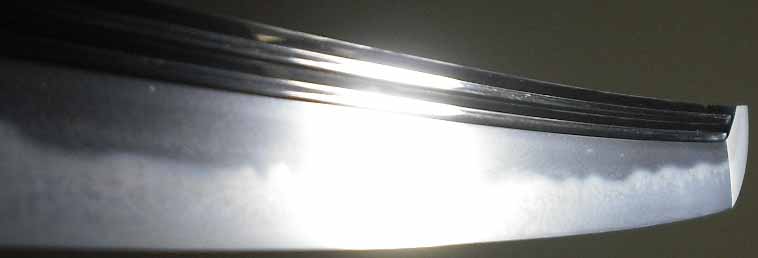
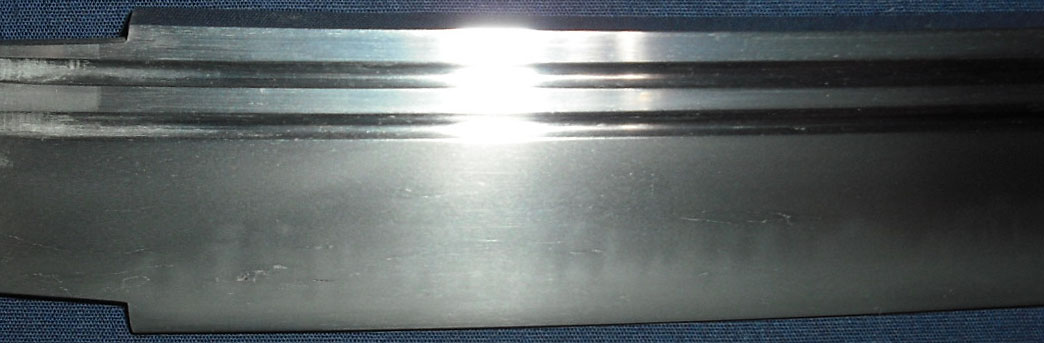
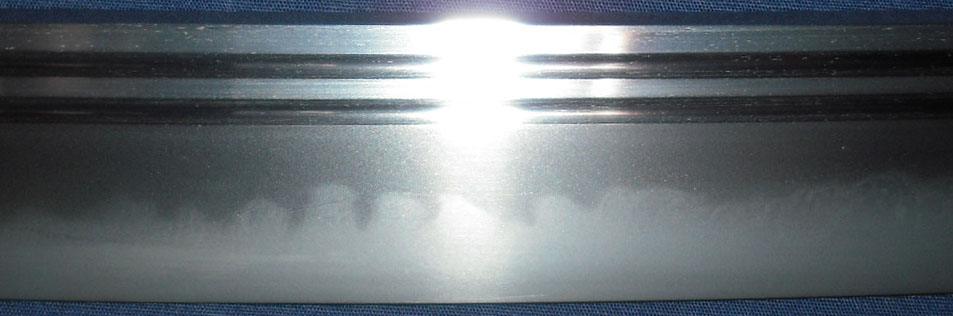
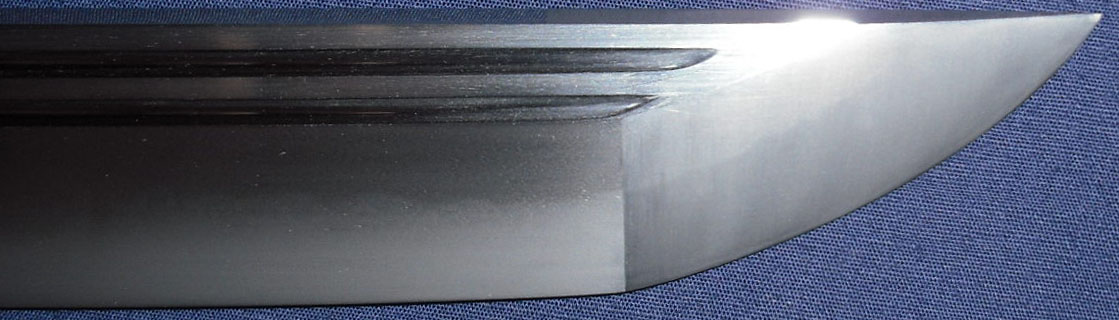
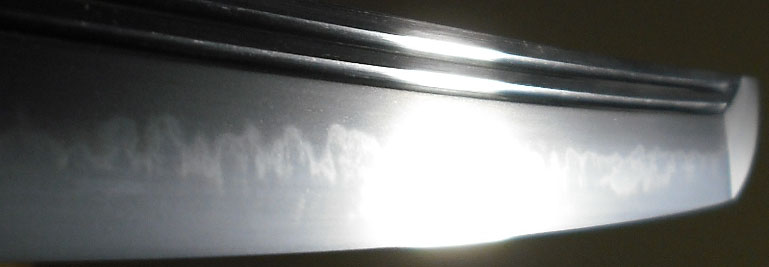
The both blades are polished up. The tachi is by the modern style, and
the wakizaashi is by the classical style.
These blades are sisters, but their characters are not the same. The tachi
has Norishige like appearance, and the wakizashi doesn't.
Now we can study them comparing the difference.
Tachi

blade length 78.5cm, curvature3.0cm, thickness at the base 8mm, width 33mm
Wakizashi

blade length 53.6cm, curvature 1.4cm, thickness at the base 8mm, width 33mm
Tachi
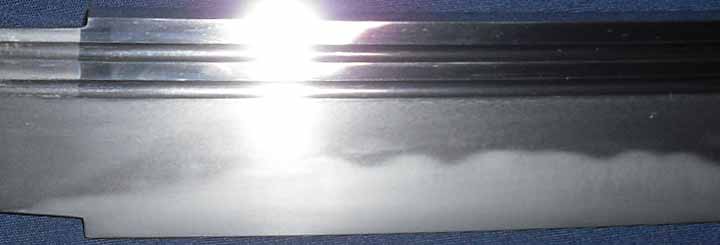

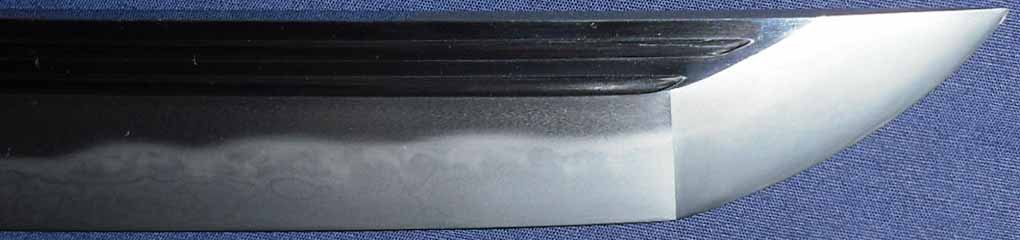
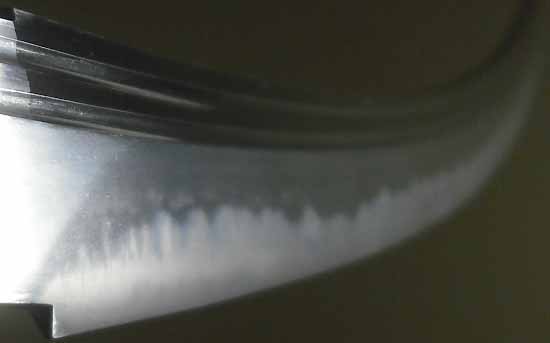
Wakizashi


Consideration
The steel layers must be the same on both blades, because they are sisters
those are made from the one steel block. But the appearance of the steel
are quite different, as no one may not find that they are the same steel.
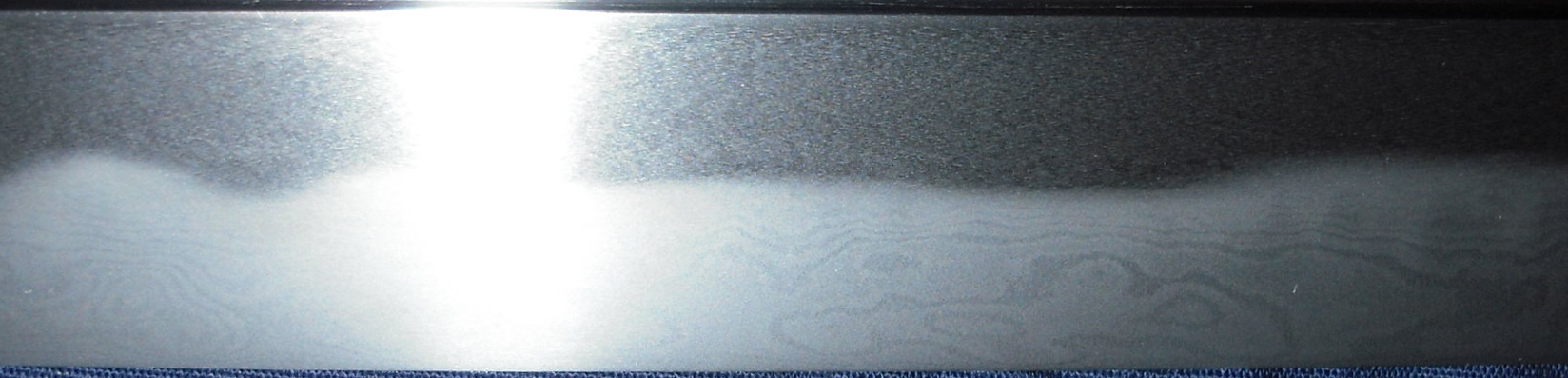
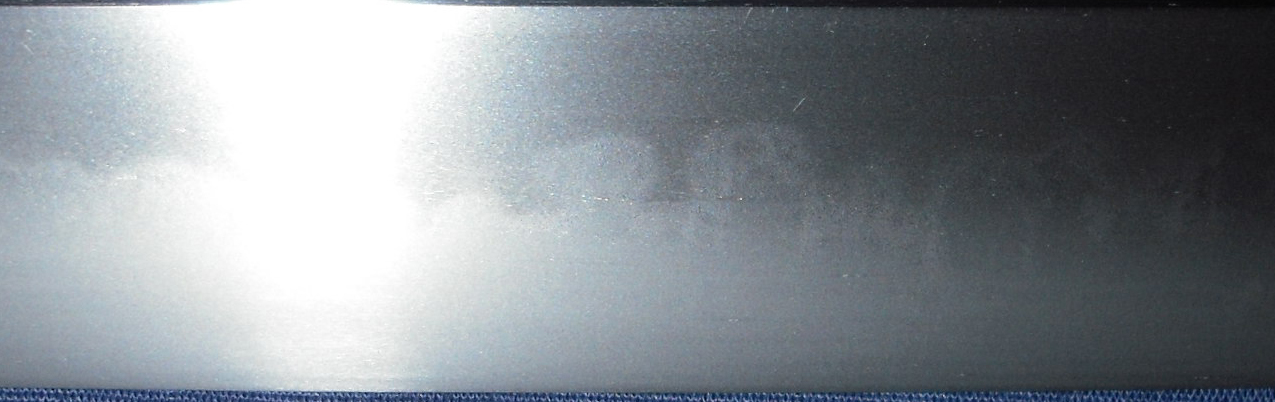
The tachi has a large layer pattern with visible jinie (steel particles),
even in the hamon area. On the other hand, we can't recognize such a large
layer pattern on the wakizashi. The steel layer is not visible, it looks
full of tight jinie. The difference of the appearance is a difference of
steel grain. It is not a difference of layer pattern. The grain of steel
particles is effected by tempering work.
Tachi
Wakizashi
The difference of grains on the same layered steel suggests us the mechanism
how nashiji-hada is brought up. (=> Nashiji-hada)