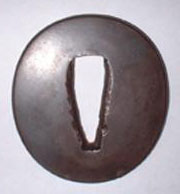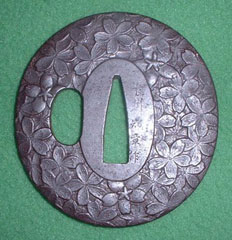
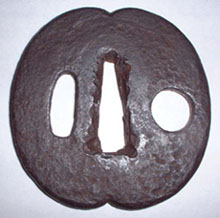
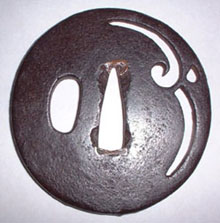
Tanto tsuba
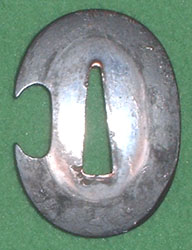
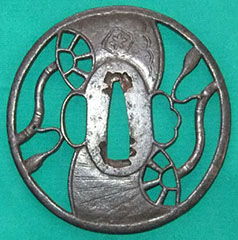
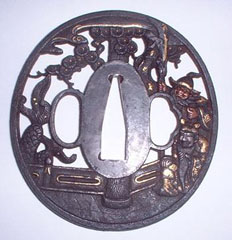
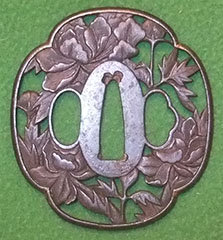
Wakizashi tsuba
Tanto tsuba
Studying SEPPA-DAI
In the case of symmetrical designed tsuba, please study the SEPPA-DAI.
Seppa-dai means a base of seppa. On the obverse, it is a base for Fuchi.
On the reverse, it is a base for habaki.
Therefore, seppa-dai in reverse should be kept flat. When the tang hole
is punched, it has to be done on the obverse side.
(=> Punchings around the tang hole of tsuba)
Obverse of tsubas what have punched seppa-dai
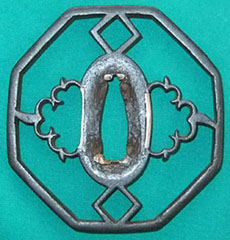
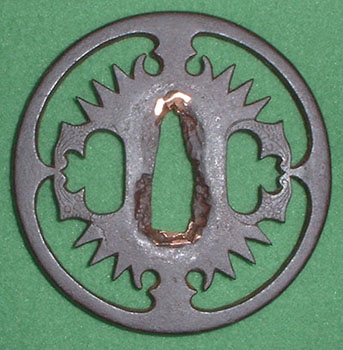
Exceptional tsubas
This tsuba is symmetry and no kozuka/kogai holes. It can be used for either
Katana or Tachi.
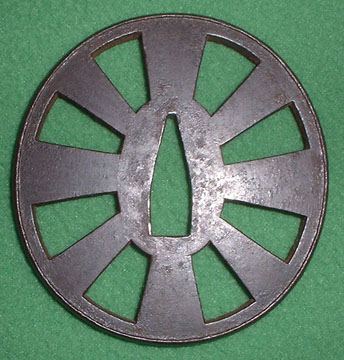
This tsuba has only kozuka hole. It is not a kogai hole. The shape of kozuka/kogai
holes are not an exact rule.
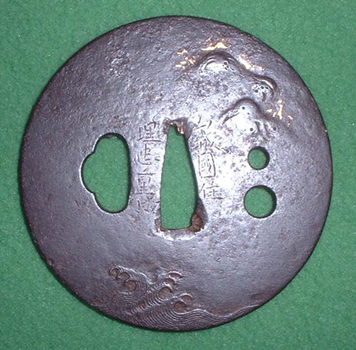
This is a simple square tsuba of custom-made. Around the tang hole is slightly
hollowed on the obverse.
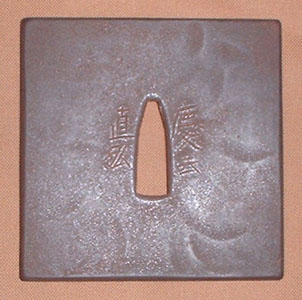
Signature of smith
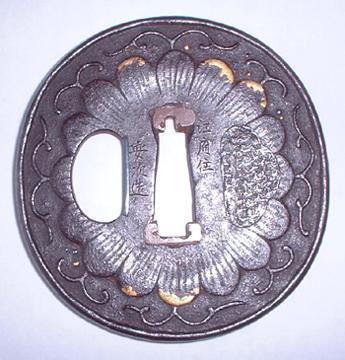
Some tsuba smiths put their signature on seppa-dai. But there is no rule
to put a signature on obverse or reverse. Some smiths put on the obverse,
and some put on the reverse.
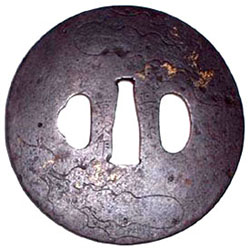
In old days, before Edo period, many smiths put their signature on the
obverse. Later, in Edo period, some smiths put their signature on the reverse.
Because they don't want their signature damaged by punching.
A signature in the obverse seppa-dai. "Efu ju Yasutsugu zo"
A signature in the reverse seppa-dai. "Shoami Shigetsugu saku"
TACHI TSUBA and NAGINATA TSUBA
They are cutting edge downward.
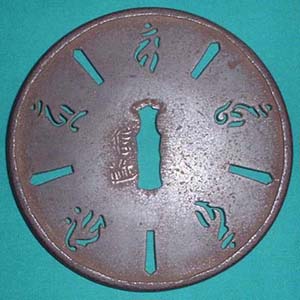
Tachi tsuba
This is a copy from a tachi tsuba in Nambokucho period (14th century).
If you put it cutting edge upward, the design becomes upside-down.
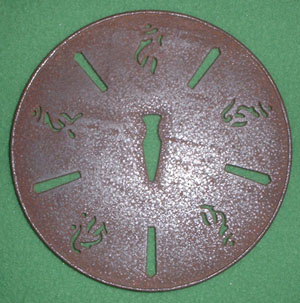
This tsuba is made as tachi tsuba, and then it is put on Katana mount.
So the tang hole is punched and reshaped upside-down to accord with katana
mount.
Naginata tsuba