I understand such idea that wanting to remove rust and clean tang. But traditionally we respect the ageing of things in Japan. Please keep the tang condition, naturally ageing deserves to be appreciated.
Additionally, the rust is influenced also by the quality of the steel. Each steel has each colours also on its rust. Good steel creates black and dense rust, and poor steel does red and rough rust. We appreciate the rust condition on the tang as same as to iron tsuba.
When the rust condition on the tang is not natural, we can treat it as fake even if the signature is genuine.
12-13th century
Tanto "Shinsoku"

13-14th century
Tanto "Kuniyoshi" (Awataguchi school)
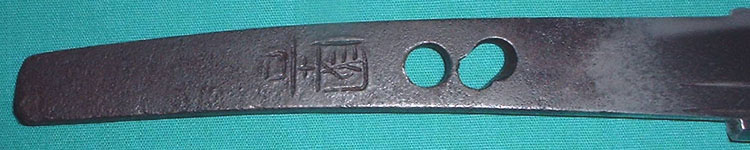
16th century
Tanto "Kanemichi"
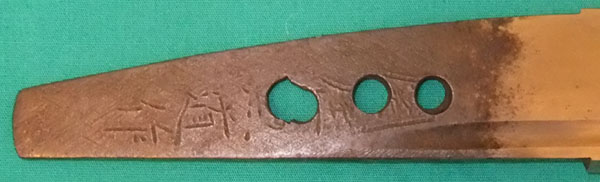
"Seki ju Kanemichi saku" (made by Kanemichi, lives in Seki)
This is a very good rust condition that comes from good steel. The checked file pattern is a tradition of Seki school.
19th century
"Higo Dotanuki Munehiro"
"Ansei 4 nen Hachigatsu nichi" (1857 August)
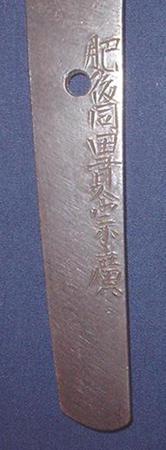
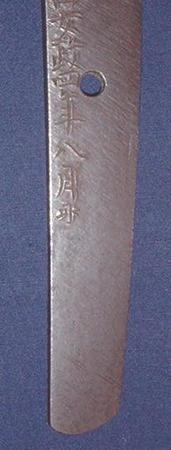
On much shortened blades, the signature has been removed by the work.
This blade is shortened and filed to make new tang in 16th century.
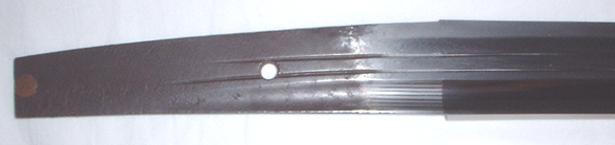

Sometimes such blades have some kinds of letters on its tang.
A gold inlay of smith's name is maker's name that was done at the same time of shortening the blade, being sorry the signature disappears.
Names that written with lacquer are attributed name.
A red lacquer is on the original unsigned tang. A gold lacquer is on the shortened tang.
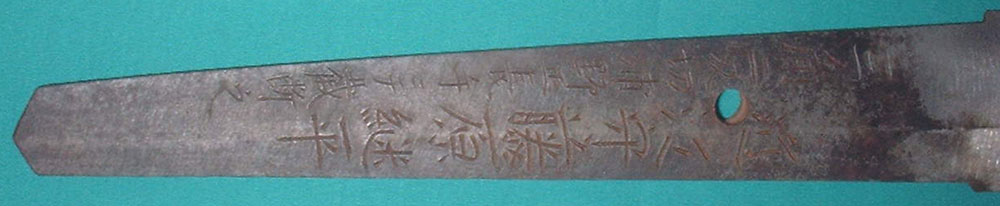
Result of cutting test in the tang
It says that two persons, Urano Masanaga and Tomita Yaichizaemon Shigetsuna, cut bodies many times.
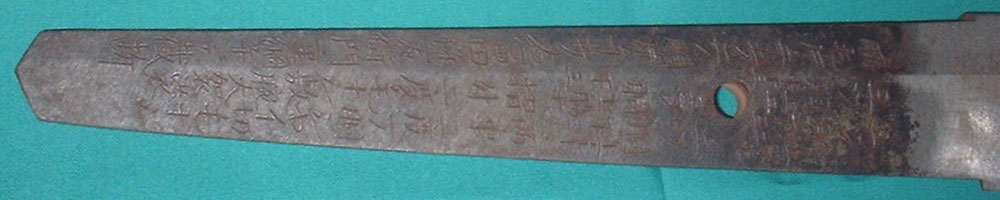
The work of tang shaping
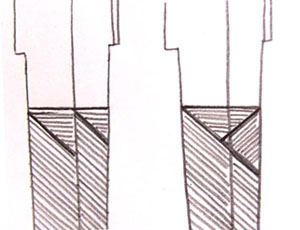
Tang is shaped with planes and files. Each of schools had their own working styles on the tang. So the shape of the tang and the file mark on it also is an interesting point to appreciate sword. The shape of tang is important to consider the age and usage of the blade.
Files and plane
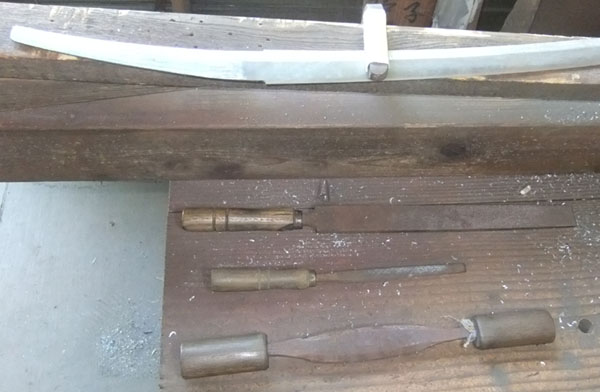
In 13th century or before, the file work (or plane work) on the tang is just a work of shaping. They didn't make intentional file pattern on it. Later century, some smiths might make an intentional file mark on it. But we are not sure when and who made file pattern intentionally.
In 17th century, some decorative filing works on the tang were developed. Some smiths intentionally made beautiful looking file patterns on their tang. In some case, the file pattern is a factor to identify the smith.
Some examples of such decorative file pattern