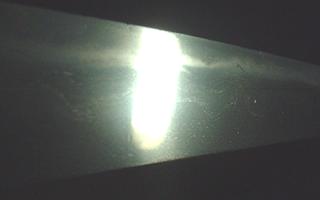
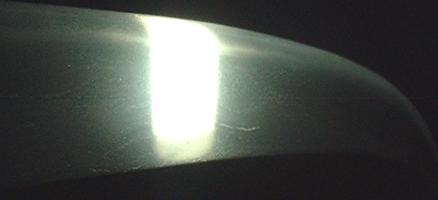
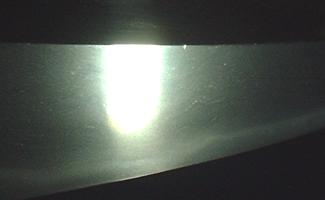
Utsuri appears relating with the flowing large layer pattern, the appearance is very interesting.

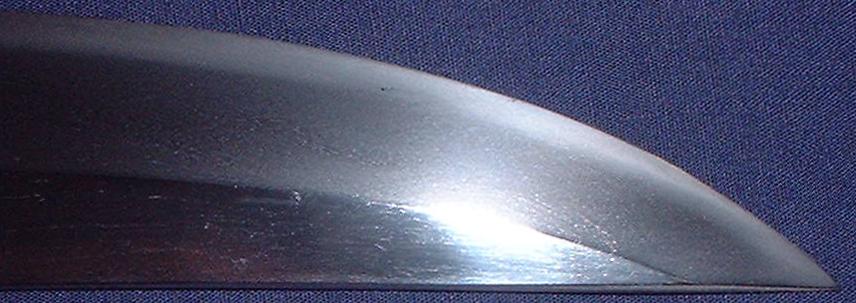
The hamon is mainly made of large particles (nie), making irregular pattern in its straight outline, and it continues into the tang. The nie particles are very fine and mild, and there are many interesting appearances coming naturally. Unfortunately the hamon at the top becomes thin by wearing.
The appearance of hardening effects (hamon, utsuri, brightness of steel particles and etc.) are very fantastic. It is impossible to explain it by words or pictures. It may come from the order of cosmos, we don't feel a designing by the smith. Such a feeling is very important to appreciate masterpieces. A displayed technical skill of smith is just an obstruction to see nature in the steel.
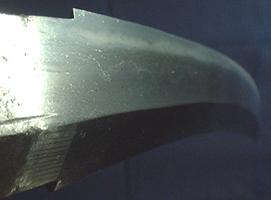
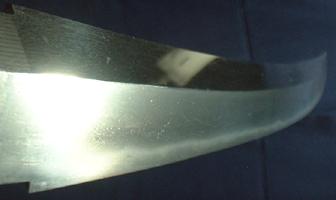

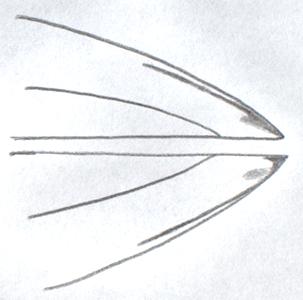
Freehand sketch of hamon at kissaki
On the whole this blade keeps healthy condition, good thickness, full robust cutting surface and enough hamon width. And it has very interesting character that is typical in Yamato tradition in 14th century. Such wild and natural appearance never be seen on the blades after 16th century.
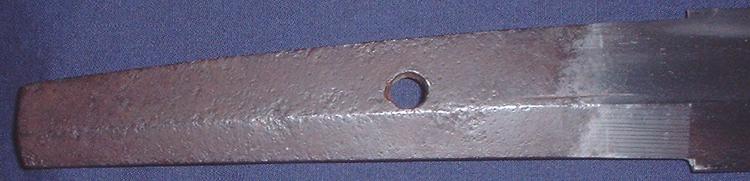
The original tang was cut down by shortening work in old day. A small trace of a narrow groove is left on the tang.
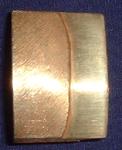
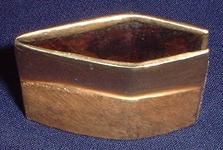
Habaki; gold foiled